
Embark on a journey into the world of fund investments with a focus on understanding and monitoring NAV trends. Dive deep into the significance of NAV trends and how they influence investment decisions.
Explore the methods to track NAV trends, compare fund performance indicators, and gain insights to make informed investment choices.
Understanding NAV Trends
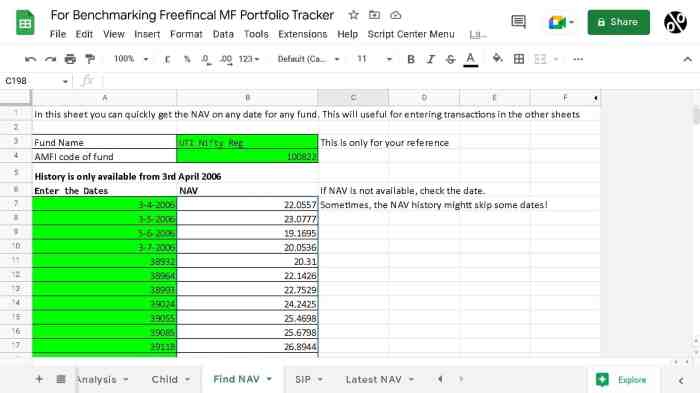
Net Asset Value (NAV) in the context of funds represents the per-share value of a mutual fund or exchange-traded fund (ETF) calculated by dividing the total value of all the securities in the portfolio, minus any liabilities, by the number of outstanding shares.
Tracking NAV trends is crucial for investors as it provides insights into the fund’s performance and helps in making informed investment decisions. By monitoring NAV trends, investors can gauge the fund’s growth or decline over time, assess its volatility, and compare it with benchmark indices to evaluate its relative performance.
Significance of Tracking NAV Trends
- NAV trends indicate the fund’s performance and can help investors assess the overall health of their investment.
- Investors can use NAV trends to identify potential buying or selling opportunities based on the fund’s growth or decline.
- Comparing NAV trends with other funds or market indices can provide valuable insights for portfolio diversification and risk management.
Examples of NAV Trends Impact
- During a bull market, rising NAV trends may indicate strong performance and attract more investors looking for growth opportunities.
- Conversely, declining NAV trends during a bear market may prompt existing investors to reconsider their investment strategy and possibly reallocate their assets.
- Fluctuating NAV trends in a volatile market can signal potential risks and uncertainties, prompting investors to adjust their portfolio holdings accordingly.
Importance of Monitoring Fund Performance
Monitoring fund performance is crucial for investors as it provides valuable insights into the health and growth potential of their investments. By tracking the performance of a fund, investors can make informed decisions about their portfolio allocation, investment strategy, and overall financial goals.
Comparing NAV Trends with Other Performance Indicators
When evaluating funds, investors often rely on various performance indicators, including NAV trends, to gauge the fund’s performance. While NAV trends provide a snapshot of the fund’s value per share, other indicators such as returns, expense ratios, and volatility help investors assess the fund’s overall performance and risk profile.
- NAV trends offer a real-time view of the fund’s value, allowing investors to track the fund’s performance over time and identify potential buying or selling opportunities.
- Returns provide a measure of the fund’s profitability and growth potential, helping investors understand the fund’s ability to generate positive returns.
- Expense ratios reveal the costs associated with investing in the fund, impacting the overall returns and growth potential of the investment.
- Volatility measures the fluctuations in the fund’s value, indicating the level of risk associated with the investment and its potential impact on the portfolio.
Impact of Fund Performance on Portfolio Growth
Fund performance plays a significant role in determining the overall growth of an investor’s portfolio. Positive performance can lead to increased portfolio value, while negative performance can result in losses and hinder portfolio growth.
For example, if a fund consistently outperforms its benchmark index and generates high returns, it can significantly contribute to the growth of an investor’s portfolio. On the other hand, if a fund underperforms or incurs losses, it can drag down the overall performance of the portfolio.
Methods to Check Fund NAV Trends
When it comes to monitoring fund NAV trends, there are several methods you can use to stay informed and make better investment decisions.
Step-by-Step Guide to Finding NAV of a Fund
- Visit the official website of the fund house where the NAV is usually updated daily.
- Look for the specific fund you are interested in and locate the NAV for that day.
- Alternatively, financial news websites and investment platforms also provide up-to-date NAV information.
Tools and Platforms to Track NAV Trends
- Investment Apps: Apps like Mint, Personal Capital, or Robinhood can help you track NAV trends on the go.
- Online Portals: Websites like Morningstar, Yahoo Finance, or Google Finance offer comprehensive fund information, including NAV trends.
- Brokerage Accounts: If you have an account with a brokerage firm, you can usually access NAV information for various funds directly.
Tips for Interpreting NAV Trends
- Look for Consistent Growth: A steady increase in NAV over time indicates a well-performing fund.
- Compare with Benchmark: Compare the fund’s NAV trend with its benchmark index to assess relative performance.
- Consider Market Conditions: Understand how external factors like market volatility can impact NAV trends.
- Seek Professional Advice: If you are unsure about interpreting NAV trends, consult a financial advisor for guidance.
As we conclude our discussion on checking fund NAV trends, remember that staying informed about NAV trends is key to successful investment strategies. Use the insights gained to navigate the world of fund investments and maximize your portfolio growth.
FAQ Explained
How often should I check fund NAV trends?
It’s recommended to monitor NAV trends regularly, but the frequency can vary based on your investment goals and strategy.
Can NAV trends alone indicate the performance of a fund?
While NAV trends provide valuable insights, it’s essential to consider other performance indicators and factors to evaluate a fund comprehensively.


