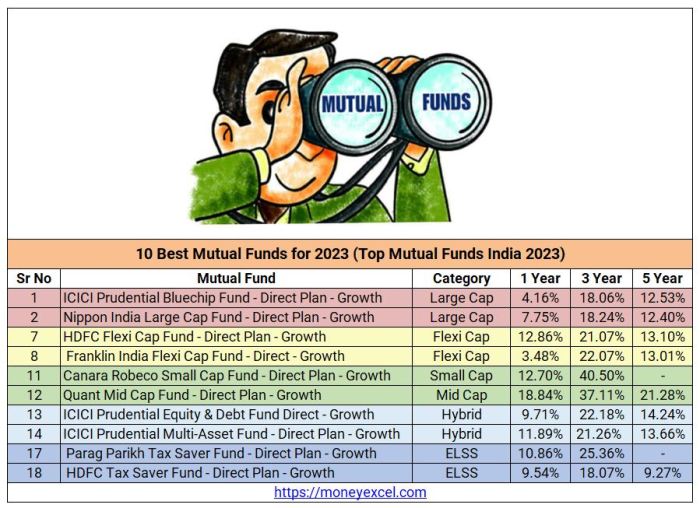
Embark on a journey through the world of mutual funds with a focus on the best performers in 2024. Delve into the top-rated funds, their strategies, and the key metrics that drive their success.
Explore the significance of diversification, the impact of sector-specific funds, risk management strategies, and the role of technology and innovation in shaping the future of mutual fund investments.
FUND PERFORMANCE
Investors often analyze the performance of mutual funds to make informed decisions about where to allocate their money. Evaluating the performance of mutual funds is crucial as it provides insight into how well a fund has been managed and its ability to generate returns. By understanding the key metrics used to evaluate fund performance, investors can assess the potential risks and rewards associated with investing in a particular fund.
Key Metrics for Evaluating Fund Performance
- Annualized Return: This metric measures the average annual return of a fund over a specific period, providing investors with a snapshot of how the fund has performed historically.
- Expense Ratio: The expense ratio represents the percentage of a fund’s assets that are used to cover operating expenses. A lower expense ratio is generally preferred as it means more of the fund’s returns are being passed on to investors.
- Sharpe Ratio: The Sharpe ratio evaluates the risk-adjusted return of a fund, taking into account the level of risk taken to achieve a certain level of return. A higher Sharpe ratio indicates better risk-adjusted performance.
- Alpha: Alpha measures the excess return of a fund compared to its benchmark index, indicating the fund manager’s skill in generating returns above the market average.
Past Performance and Future Success
While past performance is not a guarantee of future success, analyzing how a mutual fund has performed historically can provide valuable insights into its management strategy and potential for future growth. Funds that have consistently outperformed their benchmarks over time may signal strong management abilities and investment strategies that could lead to continued success in the future.
TOP RATED MUTUAL FUNDS
Investors always seek out the top-rated mutual funds to maximize their returns and minimize risks. In 2024, several mutual funds have stood out for their exceptional performance and consistent growth. Let’s take a closer look at some of the top-rated mutual funds for the current year.
Vanguard Total Stock Market Index Fund (VTSAX)
The Vanguard Total Stock Market Index Fund (VTSAX) has been a top performer for many years, offering investors exposure to the entire U.S. stock market. With a low expense ratio and a diverse portfolio of large, mid, and small-cap stocks, VTSAX has consistently outperformed its benchmark index. Historical data shows that this fund has provided solid returns over the long term, making it a favorite among investors looking for broad market exposure.
Fidelity Contrafund (FCNTX)
Fidelity Contrafund (FCNTX) is another top-rated mutual fund known for its impressive track record of beating the market. Managed by experienced fund managers, FCNTX invests in both growth and value stocks, creating a well-balanced portfolio. The fund’s strong performance over the years can be attributed to its active management style and ability to identify lucrative investment opportunities in various sectors.
T. Rowe Price Blue Chip Growth Fund (TRBCX)
The T. Rowe Price Blue Chip Growth Fund (TRBCX) is a top-rated mutual fund that focuses on investing in large-cap growth stocks. Known for its consistent performance and skilled management team, TRBCX has delivered impressive returns to investors over time. By investing in companies with strong growth potential, this fund has been able to outperform its peers and generate wealth for its shareholders.
Factors Contributing to High Performance
The high performance of these top-rated mutual funds can be attributed to a combination of factors, including skilled fund management, a well-diversified portfolio, and a focus on high-quality investments. By actively monitoring market trends, adjusting investment strategies, and conducting thorough research, these funds have been able to consistently outperform their benchmarks and deliver strong returns to investors. Additionally, the ability to adapt to changing market conditions and seize opportunities for growth has been crucial in maintaining the stellar performance of these funds.
DIVERSIFIED PORTFOLIOS
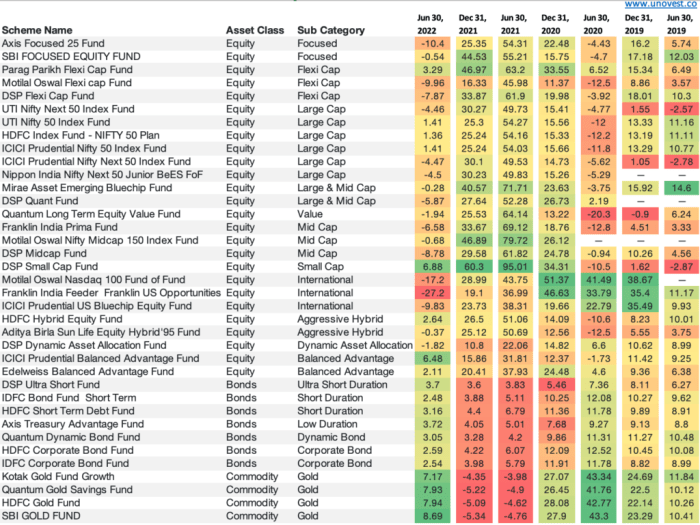
Diversification is a key strategy in mutual fund investments that involves spreading your investments across different asset classes, industries, and geographic regions. By diversifying your portfolio, you can reduce risk and minimize the impact of volatility in any single investment.When it comes to mutual funds with diversified portfolios, examples include index funds that track a broad market index, balanced funds that invest in a mix of stocks and bonds, and global equity funds that invest in companies from various countries.
Impact of Diversification
Diversification can have a significant impact on the overall performance of a mutual fund. By spreading investments across different assets, the fund is less exposed to the risk of a single investment underperforming. This helps to smooth out returns over time and can potentially enhance long-term performance. Additionally, diversification can help to lower volatility and protect against market downturns, providing more stability to the fund’s performance.
SECTOR-SPECIFIC FUNDS
Investing in sector-specific mutual funds can be a strategic way to capitalize on the growth of a particular industry or sector. In 2024, the performance of sector-specific funds varied depending on the economic landscape and market conditions. Let’s explore the best performing sector-specific funds and the risks and benefits associated with investing in them.
Best Performing Sector-Specific Funds in 2024
- Technology Sector Fund – This fund focused on technology companies and benefited from the digital transformation trend. With key holdings in leading tech giants, the fund delivered impressive returns throughout the year.
- Healthcare Sector Fund – Amidst the global health crisis, healthcare sector funds saw significant growth. Investing in pharmaceutical, biotech, and healthcare services companies, this fund outperformed many others in 2024.
- Renewable Energy Sector Fund – With the increasing focus on sustainability and renewable energy sources, this fund capitalized on the growing demand for clean energy solutions. Investors saw substantial returns from companies involved in solar, wind, and other renewable energy projects.
It’s important to note that sector-specific funds can be more volatile than diversified funds, as they are closely tied to the performance of a single sector. Investors should carefully consider their risk tolerance and long-term investment goals before allocating funds to sector-specific options.
Risks and Benefits of Sector-Specific Funds
- Risks:
- Concentration Risk – Sector-specific funds are more susceptible to economic downturns or industry-specific challenges that can impact the entire portfolio.
- Regulatory Risk – Changes in regulations or government policies can have a significant impact on certain sectors, affecting the performance of sector-specific funds.
- Benefits:
- Potential for Higher Returns – By focusing on a specific sector with strong growth potential, investors have the opportunity to earn higher returns compared to broad-based funds.
- Strategic Allocation – Sector-specific funds allow investors to strategically allocate their funds to industries they believe will outperform the broader market, based on their research and analysis.
RISK MANAGEMENT
Risk management plays a crucial role in the overall performance of mutual funds. By effectively managing risks, fund managers aim to protect investors’ capital and generate consistent returns over time. Let’s delve into the strategies used by fund managers to mitigate risks and how risk-adjusted returns impact the evaluation of mutual fund performance.
Strategies for Risk Mitigation
- Asset Allocation: Fund managers diversify investments across various asset classes to reduce concentration risk.
- Risk Monitoring: Continuous monitoring of market conditions and portfolio performance helps in identifying and addressing potential risks.
- Use of Derivatives: Hedging strategies using derivatives can help protect the portfolio from adverse market movements.
- Stress Testing: Conducting stress tests to analyze how the portfolio would perform under different market scenarios helps in preparing for unexpected events.
Role of Risk-Adjusted Returns
Risk-adjusted returns are essential in evaluating mutual fund performance as they take into account the level of risk taken to generate returns. Funds with higher risk-adjusted returns are considered more efficient in delivering returns relative to the risk incurred. One common measure used for this evaluation is the Sharpe ratio, which assesses the excess return generated per unit of risk taken.
TECHNOLOGY & INNOVATION
Technology and innovation play a crucial role in the performance of mutual funds. As advancements continue to reshape industries and create new opportunities, fund managers are leveraging these trends to enhance their portfolios and drive returns for investors.One example of a technology-driven mutual fund that has been performing well is the ARK Innovation ETF (ARKK). This fund focuses on disruptive innovation, investing in companies at the forefront of transformative technologies such as artificial intelligence, robotics, and genomic sequencing.
The fund has shown impressive returns and has attracted investors looking to capitalize on the potential growth of innovative industries.Looking ahead, future trends in technology are expected to further influence mutual fund performance. Areas such as renewable energy, cybersecurity, and e-commerce are likely to continue driving growth and presenting investment opportunities. Fund managers will need to stay abreast of these developments and strategically position their portfolios to benefit from emerging technologies.
Top Technology-Driven Mutual Funds
- The Fidelity Select Technology Portfolio invests in companies within the technology sector that show strong growth potential.
- The Vanguard Information Technology ETF tracks the performance of technology companies in the S&P 500 index, offering diversified exposure to the sector.
- The iShares Robotics and Artificial Intelligence ETF focuses on companies involved in robotics, automation, and artificial intelligence, targeting industries with high growth potential.
In conclusion, the landscape of mutual funds in 2024 showcases a blend of performance, diversification, risk management, and innovation. As investors navigate through various options, understanding the dynamics of top-performing funds becomes crucial for making informed decisions.
FAQ Explained
How can past performance indicate future success in mutual funds?
Past performance can provide insights into a fund’s track record and management strategies, offering a glimpse into its potential future performance. However, it’s essential to consider other factors as well.
What are the key characteristics of sector-specific funds?
Sector-specific funds focus on investments within a particular industry or sector, offering targeted exposure to that segment. They can provide higher returns but also come with increased risk due to the concentrated nature of their portfolios.
How do fund managers mitigate risks in mutual funds?
Fund managers employ various strategies such as diversification, asset allocation, hedging, and rigorous research to mitigate risks in mutual funds and protect investors’ capital.
What role does technology play in the performance of mutual funds?
Technology plays a pivotal role in enhancing operational efficiency, decision-making processes, and access to data for fund managers, ultimately impacting the overall performance and competitiveness of mutual funds.
Why is diversification important in mutual fund investments?
Diversification helps spread risk across different assets, reducing the impact of volatility in any single investment and potentially enhancing overall returns while minimizing potential losses.


