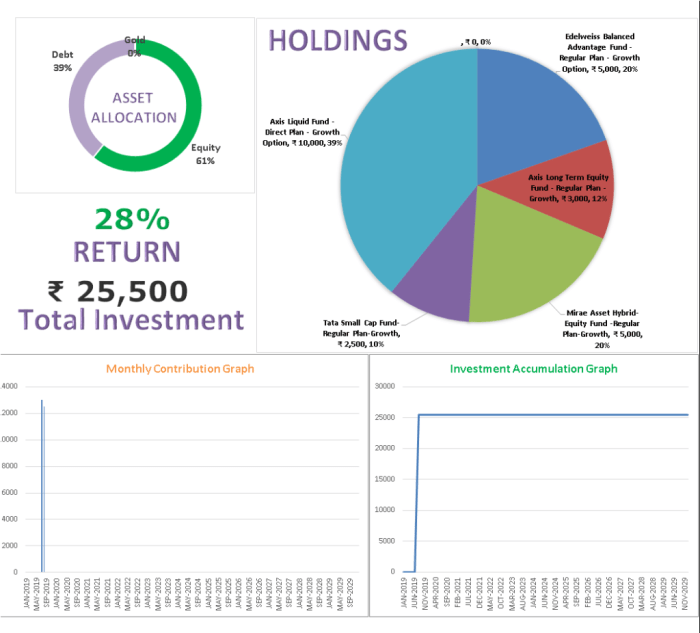
Embark on a journey of tracking your investments with the Monthly mutual fund performance tracker. Dive into the world of mutual fund performance analysis and discover how you can make informed decisions for your financial future.
Introduction to Monthly Mutual Fund Performance Tracker
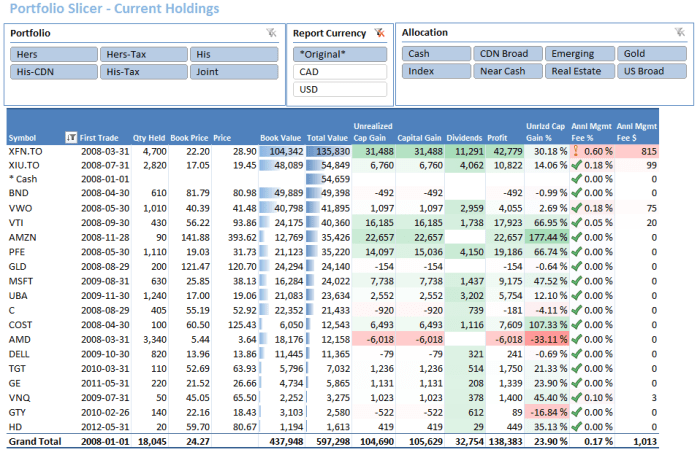
A monthly mutual fund performance tracker is a tool used by investors to monitor and analyze the performance of their mutual fund investments on a monthly basis. It provides valuable insights into how well the funds are performing over time, allowing investors to make informed decisions regarding their investment strategies.
Tracking mutual fund performance on a monthly basis is important because it helps investors stay updated on the progress of their investments and evaluate whether they are meeting their financial goals. By reviewing the performance data regularly, investors can identify trends, assess risks, and make adjustments to their portfolios as needed.
Benefits of Using a Monthly Mutual Fund Performance Tracker
- Allows investors to track the growth of their investments over time.
- Helps investors identify underperforming funds and make informed decisions on whether to reallocate their investments.
- Enables investors to compare the performance of different funds and choose the ones that align with their investment objectives.
- Provides valuable insights into market trends and helps investors stay informed about the overall performance of the mutual fund industry.
Fund Performance
When evaluating mutual fund performance, there are several key metrics that investors typically look at to gauge the fund’s success. These metrics include:
- 1. Annualized Return: This measures the fund’s average annual return over a specific period of time.
- 2. Standard Deviation: This indicates the fund’s volatility or risk level.
- 3. Sharpe Ratio: This ratio assesses the fund’s risk-adjusted return compared to a risk-free investment.
- 4. Expense Ratio: This reflects the percentage of the fund’s assets that goes towards management fees and operating expenses.
Interpreting Performance Data
When looking at the performance data provided in a monthly tracker, investors should pay attention to trends over time rather than focusing solely on short-term fluctuations. It’s essential to compare the fund’s performance to relevant benchmarks or indices to get a better sense of how well the fund is performing relative to its peers or the overall market.
Comparing Different Tracking Methods
There are various methods of tracking fund performance, including comparing it against benchmarks or indices. Benchmarks are specific standards used to evaluate the fund’s performance, such as the S&P 500 for U.S. stocks. On the other hand, indices represent a broader market or asset class, providing a more general comparison point.
Components of a Monthly Mutual Fund Performance Tracker
When analyzing the performance of mutual funds on a monthly basis, there are several key components that are typically included in a performance tracker. These components help investors track the fund’s progress, compare it to benchmarks, and make informed decisions about their investments.
Graphs and Charts
Graphs and charts are commonly used in monthly mutual fund performance trackers to visually represent the fund’s performance over time. Line graphs are often used to show the fund’s NAV (Net Asset Value) over the month, allowing investors to see how the fund has performed in relation to its past performance. Bar charts may also be used to compare the fund’s performance to a benchmark index or other funds in the same category.
Tables
Tables are another essential component of a monthly mutual fund performance tracker. These tables typically include key performance metrics such as the fund’s returns, expense ratios, turnover rates, and yield. By presenting this data in a clear and organized manner, investors can easily compare different funds and make informed decisions about where to allocate their money.
Historical Performance Data
Historical performance data is crucial in a monthly mutual fund performance tracker as it provides investors with a long-term view of the fund’s performance. This data is often presented in the form of a table or a line graph, showing the fund’s performance over the past months or years. By analyzing historical performance data, investors can identify trends, patterns, and potential risks associated with the fund.
Benefits of Using a Monthly Mutual Fund Performance Tracker
Regularly monitoring mutual fund performance offers several advantages to investors. By tracking the performance of their mutual funds on a monthly basis, investors can make informed decisions based on the data provided by the tracker. This data allows investors to analyze trends, assess risks, and adjust their investment strategies accordingly to achieve their financial goals.
Advantages of Regularly Monitoring Mutual Fund Performance
- Identifying underperforming funds early on
- Tracking progress towards financial goals
- Adjusting investment strategies based on market trends
- Managing risks effectively
How Investors Can Make Informed Decisions Based on Tracker Data
- Comparing fund performance against benchmarks
- Understanding the impact of fees and expenses on returns
- Diversifying portfolio based on performance analysis
- Rebalancing investments to maintain desired asset allocation
How Tracking Performance Can Help in Achieving Financial Goals
- Setting realistic return expectations
- Monitoring progress towards long-term financial objectives
- Identifying opportunities for portfolio growth
- Staying disciplined and focused on investment goals
In conclusion, the Monthly mutual fund performance tracker is a powerful tool that empowers investors to stay on top of their investment performance. By utilizing this tracker, investors can navigate the complex world of mutual funds with confidence and clarity.
Question Bank
What is a monthly mutual fund performance tracker?
A monthly mutual fund performance tracker is a tool used to monitor and analyze the performance of mutual funds over a monthly period.
How can investors benefit from using a monthly mutual fund performance tracker?
Investors can benefit from using a monthly mutual fund performance tracker by gaining insights into the performance of their investments, making informed decisions, and tracking progress towards financial goals.


