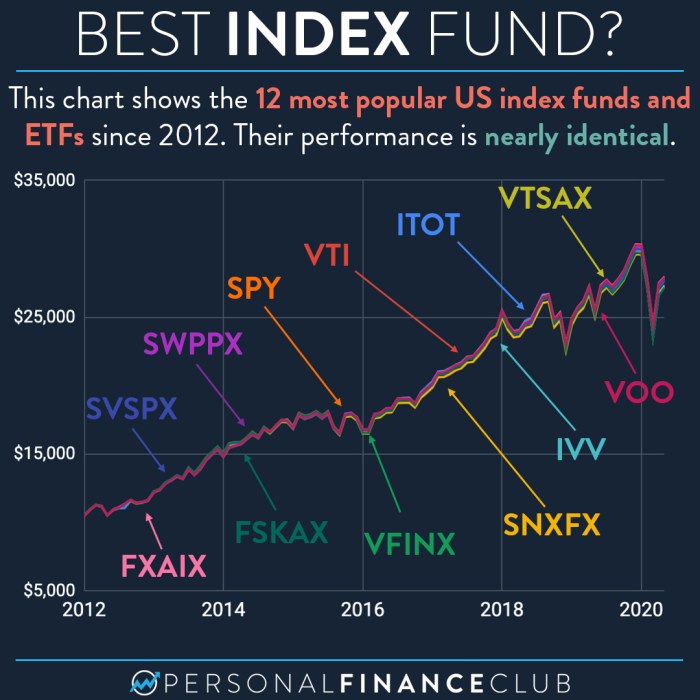
As Top index funds performance takes center stage, this opening passage beckons readers with casual formal language style into a world crafted with good knowledge, ensuring a reading experience that is both absorbing and distinctly original.
Index funds have become a popular choice for investors looking to build a diversified portfolio. Understanding the performance of these funds is crucial for making informed investment decisions.
Introduction to Top Index Funds Performance
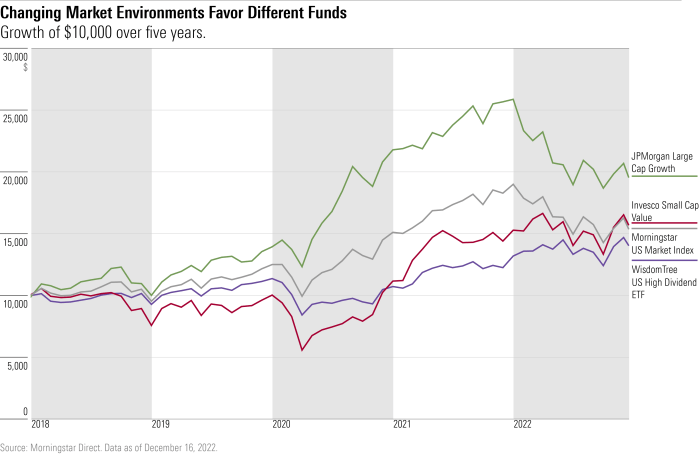
Index funds are investment funds that aim to replicate the performance of a specific market index, such as the S&P 500. These funds provide investors with a way to diversify their portfolios and gain exposure to a broad range of securities without the need for active management. The performance of top index funds is crucial in the financial market as they serve as benchmarks for investors to gauge the overall market movement.
When top index funds perform well, it indicates a positive trend in the market, while poor performance may signal potential risks or downturns. Investors often consider top index funds for long-term investment strategies due to their low fees, diversification benefits, and historically strong performance compared to actively managed funds. By investing in top index funds, investors can passively track the market’s performance and achieve consistent returns over time.
Factors Influencing Top Index Funds Performance
Top index funds performance is influenced by various factors that play a crucial role in determining their success in the market.
Market Trends and Economic Indicators
Market trends and economic indicators have a significant impact on the performance of top index funds. These funds are designed to track specific market indexes, so any fluctuations or changes in the market can directly affect their performance. Economic indicators such as GDP growth, inflation rates, and unemployment levels can also influence the overall market sentiment, thereby impacting index fund performance.
Fund Management
The expertise and decisions made by fund managers can greatly influence the performance of top index funds. Effective fund management involves strategic asset allocation, timely rebalancing, and risk management techniques. A skilled fund manager can navigate through market uncertainties and optimize the fund’s performance.
Diversification, Expense Ratios, and Tracking Errors
Diversification plays a crucial role in mitigating risks and enhancing the stability of index funds. A well-diversified portfolio can help reduce the impact of individual stock volatility on the overall fund performance. Additionally, low expense ratios are favorable for investors as they minimize the costs associated with fund management. Tracking errors, which reflect the deviation of a fund’s performance from its benchmark index, can also affect the overall success of top index funds.
Evaluating Top Index Funds Performance
When evaluating the performance of index funds, investors rely on various metrics to gauge their effectiveness and profitability. These metrics provide insights into how well an index fund is performing compared to its benchmark index and other similar funds in the market.
Common Metrics for Evaluating Index Funds Performance
- Annualized Return: This metric calculates the average annual return of an index fund over a specific period, giving investors a clear picture of its performance.
- Expense Ratio: The expense ratio reflects the percentage of assets deducted annually to cover the fund’s operating expenses. Lower expense ratios are generally preferred by investors.
- Tracking Error: This metric measures the divergence between the index fund’s performance and its benchmark index. A lower tracking error indicates a closer alignment with the index.
- Sharpe Ratio: The Sharpe ratio evaluates the risk-adjusted return of an index fund, helping investors assess whether the fund’s returns justify the level of risk taken.
Benchmark Indices and Their Significance
Benchmark indices play a crucial role in evaluating the performance of top index funds as they provide a standard for comparison. By comparing an index fund’s performance against its benchmark index, investors can determine how well the fund is delivering returns relative to the market.
Tools and Platforms for Tracking Index Funds Performance
- Morningstar: Morningstar is a popular platform that offers detailed information on various index funds, including performance metrics, expenses, and historical data.
- Yahoo Finance: Yahoo Finance provides tools for tracking and comparing index funds, enabling investors to monitor their performance and make informed decisions.
- Bloomberg Terminal: Bloomberg Terminal is a professional platform that offers comprehensive data and analytics for evaluating index fund performance, catering to institutional investors and financial professionals.
Strategies for Maximizing Top Index Funds Performance
When it comes to maximizing the performance of your top index fund investments, there are several key strategies that investors can implement to enhance their returns and mitigate risks. One of the most crucial aspects is proper asset allocation and regular rebalancing to ensure a well-diversified portfolio that aligns with your investment goals and risk tolerance.
The Importance of Asset Allocation and Rebalancing
Proper asset allocation is vital for achieving optimal returns from top index funds. By spreading your investments across different asset classes, such as stocks, bonds, and real estate, you can reduce the overall risk in your portfolio while potentially increasing returns. Additionally, regular rebalancing allows you to maintain your desired asset allocation mix and adjust your investments according to market conditions.
- Asset allocation is the key to managing risk and maximizing returns in your index fund portfolio.
- Regular rebalancing ensures that your portfolio remains aligned with your investment objectives and risk tolerance.
- Consider your investment goals and time horizon when determining the appropriate asset allocation for your index fund investments.
Mitigating Risks and Aiming for Higher Performance
While index funds are known for their low costs and broad market exposure, they are not without risks. To mitigate these risks and potentially enhance performance, investors can consider strategies such as dollar-cost averaging, which involves investing a fixed amount at regular intervals regardless of market conditions. This approach can help smooth out market volatility and potentially increase returns over the long term.
Dollar-cost averaging can help reduce the impact of market fluctuations on your index fund investments and potentially improve long-term performance.
- Consider diversifying your index fund investments across different sectors and regions to further reduce risk and enhance potential returns.
- Regularly review and adjust your investment strategy based on changing market conditions and your financial goals.
- Consult with a financial advisor to develop a comprehensive investment plan that aligns with your risk tolerance and long-term objectives.
In conclusion, maximizing the performance of top index funds requires a strategic approach that considers various factors like asset allocation, expenses, and market trends. By employing sound investment strategies, investors can aim for higher returns while managing risks effectively in their portfolios.
Question & Answer Hub
What are index funds?
Index funds are passively managed investment funds that aim to track the performance of a specific market index, providing investors with diversified exposure to a wide range of securities.
How can investors evaluate the performance of index funds?
Investors can evaluate the performance of index funds by looking at metrics such as returns compared to the benchmark index, expense ratios, and tracking errors. These factors help assess how well the fund is performing relative to its objectives.
Why is diversification important in index fund investments?
Diversification helps spread risk across different assets, reducing the impact of a single investment’s performance on the overall portfolio. It is a key strategy in index fund investments to minimize risks and enhance long-term returns.


