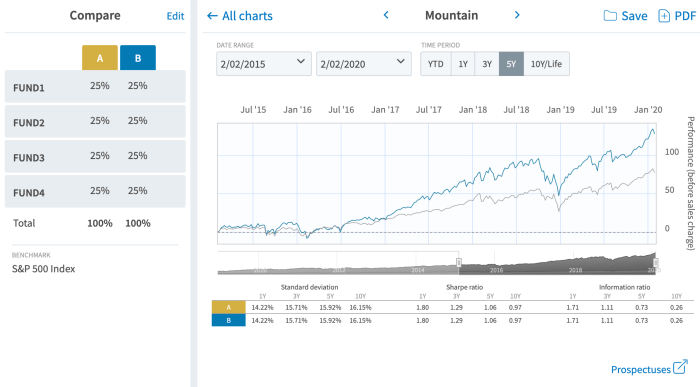
Starting with Mutual fund performance comparison, this opening paragraph aims to engage readers with a brief overview of the importance and methods of comparing mutual fund performance.
Exploring the key factors influencing mutual fund performance and the tools available for investors sets the stage for a comprehensive understanding of this essential aspect of investing.
Introduction to Mutual Fund Performance Comparison
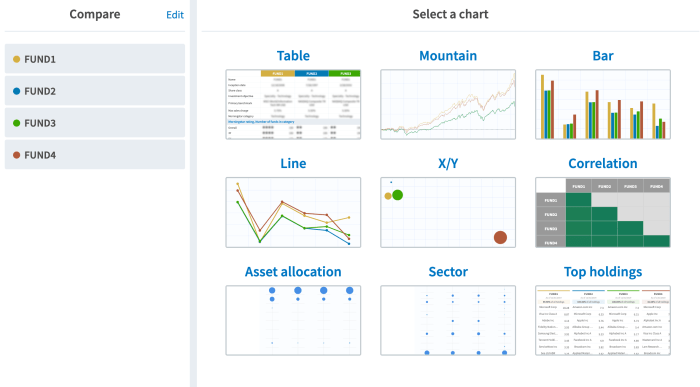
When it comes to investing in mutual funds, one key aspect that investors need to consider is the performance of the funds. Mutual fund performance comparison involves analyzing the returns and risk associated with different mutual funds to make informed investment decisions.
Comparing mutual fund performance is important as it helps investors evaluate how well a particular fund has performed relative to its peers or benchmark indices. This analysis provides insights into the fund’s historical performance, volatility, and consistency, which are crucial factors in assessing its potential for future returns.
Importance of Comparing Mutual Fund Performance
- Identifying top-performing funds: By comparing mutual fund performance, investors can identify funds that have consistently outperformed their peers or benchmarks, indicating strong management and investment strategies.
- Managing risk: Comparing the risk-adjusted returns of different funds can help investors determine the level of risk they are comfortable with and choose funds that align with their risk tolerance and investment goals.
- Evaluating fund managers: Performance comparison allows investors to assess the skill and expertise of fund managers in generating returns and managing risks, providing valuable insights for decision-making.
Factors Influencing Mutual Fund Performance
When it comes to mutual fund performance, there are several key factors that can significantly influence how well a fund performs. These factors can range from economic conditions to the expertise of the fund manager. Let’s delve into some of the main factors that impact mutual fund performance.
Economic Conditions
Economic conditions play a crucial role in determining the performance of mutual funds. Factors such as interest rates, inflation, and overall market stability can all have a direct impact on how well a mutual fund performs. For example, during times of high inflation, certain sectors may outperform others, leading to variations in fund performance. Fund managers need to carefully analyze economic indicators to make informed investment decisions that can help maximize returns for investors.
Fund Manager Expertise
The expertise and skill of the fund manager are also key factors in determining mutual fund performance. A skilled fund manager with a deep understanding of the market and a solid investment strategy can make a significant difference in how well a fund performs. Fund managers are responsible for making crucial investment decisions, such as asset allocation and stock selection, that can impact the overall performance of the fund.
Their ability to adapt to changing market conditions and identify profitable investment opportunities is essential for achieving consistent returns for investors.
Methods for Comparing Mutual Fund Performance
When evaluating mutual fund performance, there are several key metrics and methods that investors commonly use to assess the fund’s success. These metrics help investors gauge how well a mutual fund has performed compared to its peers and benchmarks.
Performance Metrics
- The Sharpe ratio: This metric measures a fund’s risk-adjusted return, taking into account the level of risk the fund has taken to achieve its returns. A higher Sharpe ratio indicates better risk-adjusted performance.
- Alpha: Alpha measures the excess return of a mutual fund compared to the return predicted by its beta. A positive alpha indicates the fund has outperformed its expected return based on its level of risk.
- Beta: Beta measures a fund’s sensitivity to market movements. A beta of 1 means the fund moves in line with the market, while a beta greater than 1 indicates the fund is more volatile than the market.
Significance of Benchmarking
Benchmarking is crucial in comparing mutual fund performance as it provides a standard for evaluating how well a fund has performed relative to a specific index or peer group. By comparing a fund’s performance against a benchmark, investors can determine whether the fund’s returns are attributed to skillful management or simply mirroring the market. This helps investors make informed decisions about which funds align with their investment goals and risk tolerance.
Performance Comparison Tools and Platforms
When it comes to comparing mutual fund performance, investors have access to a variety of tools and platforms that can help them make informed decisions. These tools provide valuable insights and data that enable investors to analyze fund performance effectively.
Morningstar
Morningstar is one of the leading platforms used by investors to compare mutual fund performance. It offers a wide range of tools and resources to evaluate funds based on various criteria such as risk-adjusted returns, expense ratios, and historical performance. Investors can utilize Morningstar’s rating system to identify top-performing funds and make well-informed investment choices.
Yahoo Finance
Yahoo Finance is another popular platform that provides tools for comparing mutual fund performance. Investors can use Yahoo Finance to track fund performance over time, compare multiple funds side by side, and analyze key metrics such as volatility and fund size. The platform also offers news and insights that can help investors stay up-to-date on market trends and developments.
Lipper Leaders
Lipper Leaders is a tool that evaluates mutual fund performance based on consistent return, preservation of capital, and expense efficiency. Investors can use Lipper Leaders to identify funds that have outperformed their peers and assess their overall performance relative to the market. This platform provides valuable data and analysis to help investors make informed decisions about their investments.
Understanding Fund Performance
Fund performance refers to the measurement of how well a mutual fund has performed over a specific period. It is a crucial indicator for investors to assess the success of their investment and make informed decisions. Understanding fund performance involves analyzing the returns generated by the fund and comparing them to a benchmark or similar funds in the market.
Absolute vs. Relative Fund Performance
Absolute fund performance measures the actual returns generated by a mutual fund without comparing them to any benchmark. It provides a straightforward assessment of how well the fund has performed in isolation. On the other hand, relative fund performance compares the returns of a mutual fund to a benchmark index or similar funds in the same category. This comparison helps investors understand how the fund has performed relative to its peers and the broader market.
Factors Influencing Fund Performance
- Economic Conditions: The overall economic environment can significantly impact the performance of a mutual fund. Factors such as interest rates, inflation, and GDP growth can influence the returns generated by the fund.
- Market Trends: The performance of the stock market, bond market, or other asset classes can affect the returns of a mutual fund. Fund managers must navigate market trends to optimize performance.
- Management Style: The investment strategy and decisions made by the fund manager play a crucial role in determining fund performance. Active management vs. passive management can lead to different outcomes.
- Fees and Expenses: The costs associated with managing a mutual fund, such as management fees and operating expenses, can impact the overall returns for investors.
In conclusion, understanding mutual fund performance comparison is crucial for making informed investment decisions. By analyzing factors like fund manager expertise and benchmarking, investors can enhance their portfolio strategies and maximize returns.
FAQ Resource
What is the significance of comparing mutual fund performance?
Comparing mutual fund performance helps investors assess the efficiency and profitability of different investment options, guiding them towards making informed decisions.
How do economic conditions impact mutual fund performance?
Economic conditions such as interest rates, inflation, and market volatility can influence the performance of mutual funds by affecting the overall market environment and investor sentiment.
What are some commonly used metrics for evaluating mutual fund performance?
Metrics like Sharpe ratio, alpha, and beta are commonly used to evaluate mutual fund performance, providing insights into risk-adjusted returns and fund manager efficiency.
What are the differences between absolute and relative fund performance?
Absolute fund performance measures the fund’s actual returns, while relative performance compares the fund’s returns to a benchmark index or peer group, highlighting its performance relative to others in the same category.


