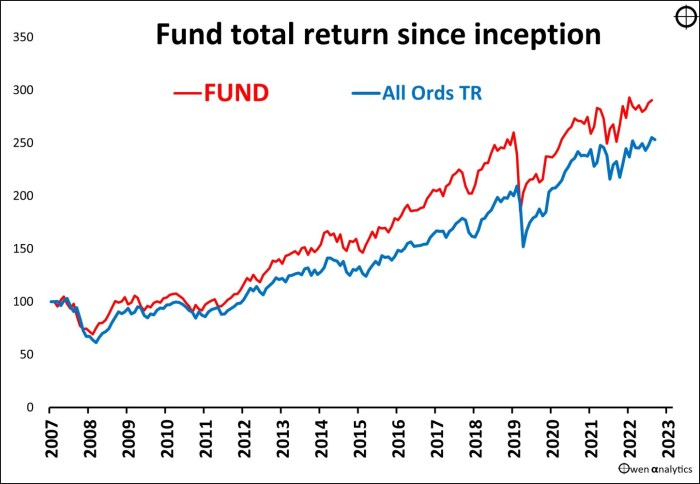
Delving into the realm of fund management, the impact of fund managers on performance is a crucial factor that can make or break investment success. Let’s explore how fund managers drive fund performance and the key strategies they employ to achieve optimal results.
As we navigate through the intricacies of fund management, we will uncover the essential elements that influence fund performance and the significance of selecting the right fund manager for maximizing returns.
Fund Manager Impact on Performance

When it comes to the performance of a fund, the fund manager plays a crucial role in influencing the outcomes. Fund managers are responsible for making key decisions regarding the investments within the fund, which can directly impact its overall performance.
Strategies Used by Fund Managers
- Active Trading: Fund managers who engage in active trading constantly buy and sell securities in an attempt to outperform the market.
- Asset Allocation: Fund managers strategically allocate assets across different asset classes to optimize returns and manage risk.
- Research and Analysis: Fund managers conduct in-depth research and analysis to identify investment opportunities and make informed decisions.
Importance of Fund Manager Selection
The selection of a fund manager is crucial in achieving optimal fund performance. A skilled and experienced fund manager can make a significant difference in the fund’s returns and risk management strategies.
Active vs. Passive Fund Managers
- Active Fund Managers: These managers aim to outperform the market by making strategic investment decisions based on research and analysis.
- Passive Fund Managers: These managers aim to replicate the performance of a specific index by holding a diversified portfolio of securities without actively trading.
Fund Performance
Fund performance refers to how well a fund has performed in terms of returns on investments over a specific period. It is a crucial measure of the success and effectiveness of a fund manager in managing the fund’s assets.
Measuring Fund Performance
- Annualized Return: This metric calculates the average annual return of a fund over a specific period.
- Sharpe Ratio: It measures the risk-adjusted return of a fund, taking into account the level of risk taken to achieve the returns.
- Standard Deviation: This metric shows the volatility of a fund’s returns, indicating how much the returns deviate from the average.
Factors Influencing Fund Performance
- Market Conditions: Economic factors, market trends, and geopolitical events can impact fund performance.
- Investment Strategy: The fund manager’s investment approach, asset allocation, and stock selection play a significant role in determining performance.
- Fees and Expenses: High fees can eat into returns, affecting the overall performance of the fund.
Importance of Consistent Fund Performance
- Attracting Investors: Consistent fund performance is crucial in attracting and retaining investors who seek stable returns and growth of their investments.
- Building Trust: Investors rely on consistent performance as a sign of the fund manager’s expertise and ability to deliver results over time.
- Competitive Advantage: Funds with a track record of consistent performance have a competitive edge in the market, attracting more investors and assets under management.
In conclusion, the role of fund managers in shaping fund performance cannot be overstated. By understanding their impact and implementing effective strategies, investors can pave the way for long-term financial success in the dynamic world of investments.
Key Questions Answered
How do fund managers influence fund performance?
Fund managers impact fund performance through strategic investment decisions, portfolio management, and risk assessment.
What are the key differences between active and passive fund managers in terms of performance?
Active fund managers aim to outperform the market through frequent trading and analysis, while passive fund managers seek to mirror market performance by tracking a specific index.
Why is fund manager selection important for fund performance?
The right fund manager can significantly impact fund performance by implementing effective strategies, managing risks, and adapting to market conditions.
What metrics are used to evaluate fund performance?
Common metrics include return on investment, volatility, Sharpe ratio, and benchmark comparisons.
How does consistent fund performance attract investors?
Consistent fund performance builds trust and credibility with investors, showcasing the fund’s ability to deliver stable returns over time.


